
Large satellite electronics
C3S is actively involved in large satellite projects, specializing in power distribution systems and payload synchronization. Our engineering roots lie in long-duration, high-reliability missions that demand redundancy and
robust performance.
We design redundant subsystems with high availability and long lifecycles in-house, meeting the rigorous standards of complex space platforms. Our power distribution units ensure efficient, protected energy delivery with built-in redundancy, remote control, and diagnostics.
DCDC Converter
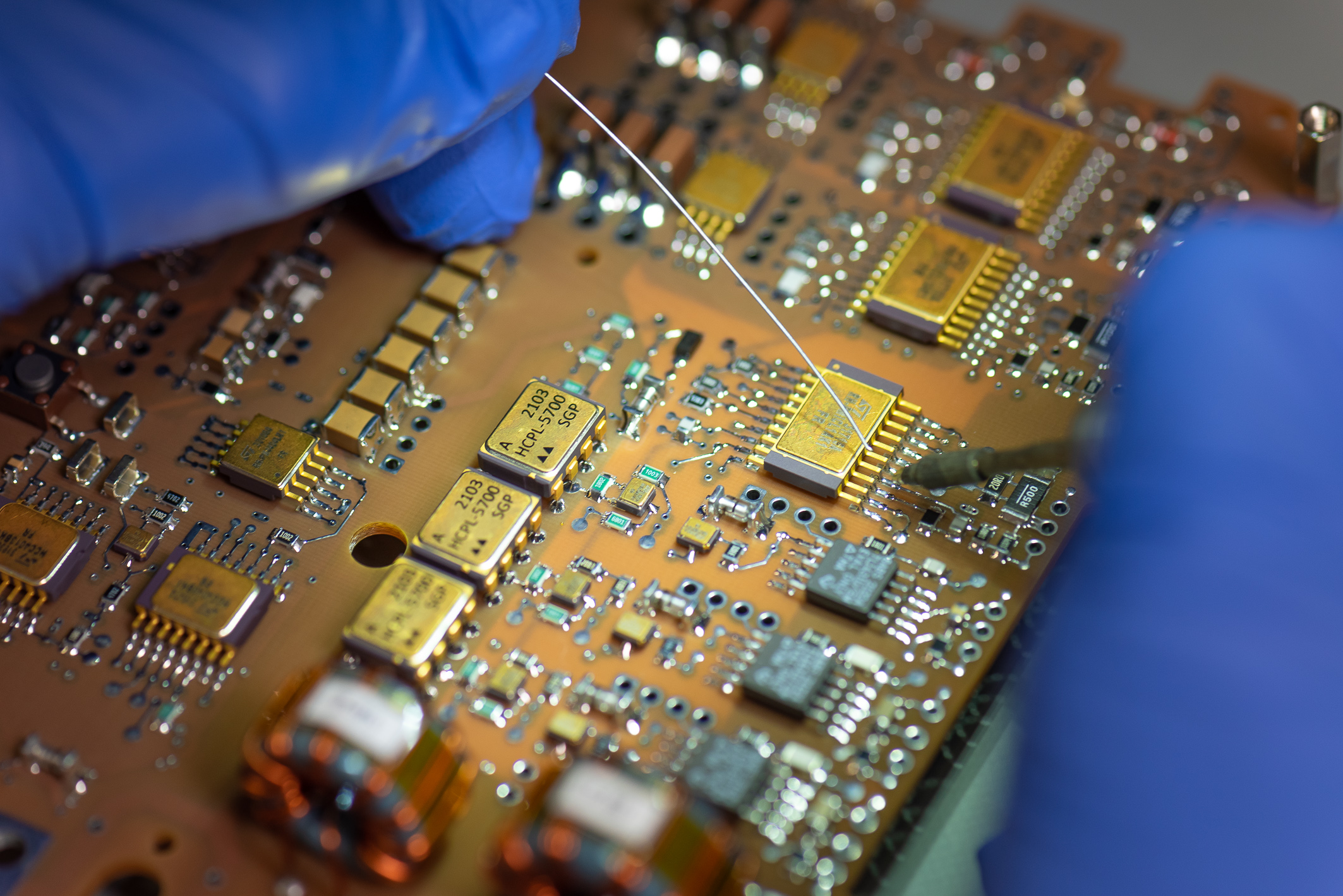
DCDC converters are the cornerstones of satellite power supplies, as converting the fluctuating DC voltage from solar panels to custom voltage and power levels, while meeting specific requirements for noise and efficiency, poses a unique challenge for the onboard electronics of every large satellite.
These satellites typically have planned lifespans of 5-10+ years, so both design and component selection prioritize the highest reliability.
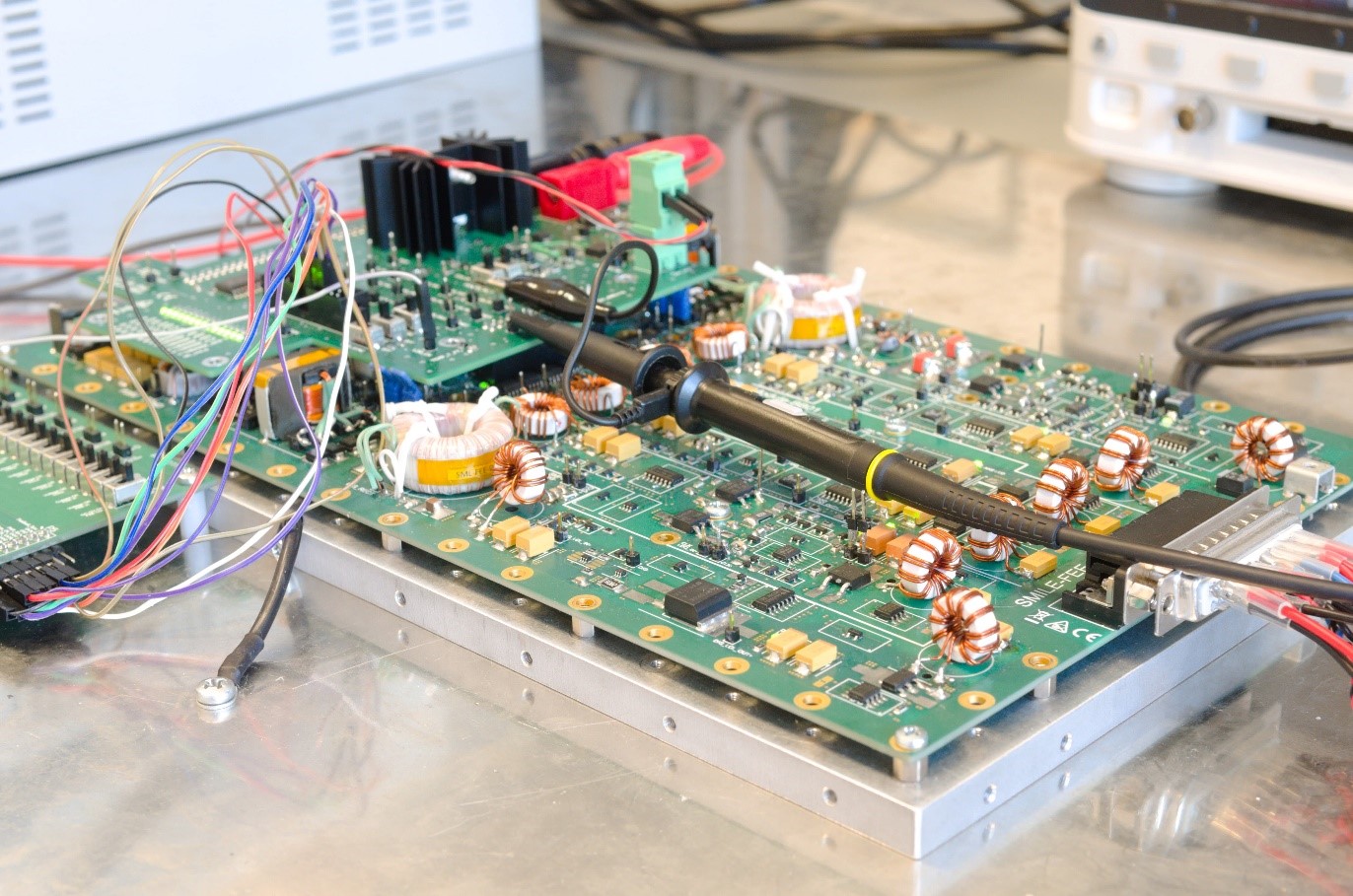
The components have been integrated, and the converter’s measurement campaign has been completed. While raising the TRL of C3S to TRL- 6/7 involves implementing processes and learned plenty of “good practices” to create a robust converter for the space industry. The requirements, defined by an LSI for motor driving, include a 22-38V input, ±44V and +15V output voltages, and a power rating of 75W. The system features ECSSbased TMTC and a robust protection system, utilizing forward topology with coupled chokes and galvanic isolation.
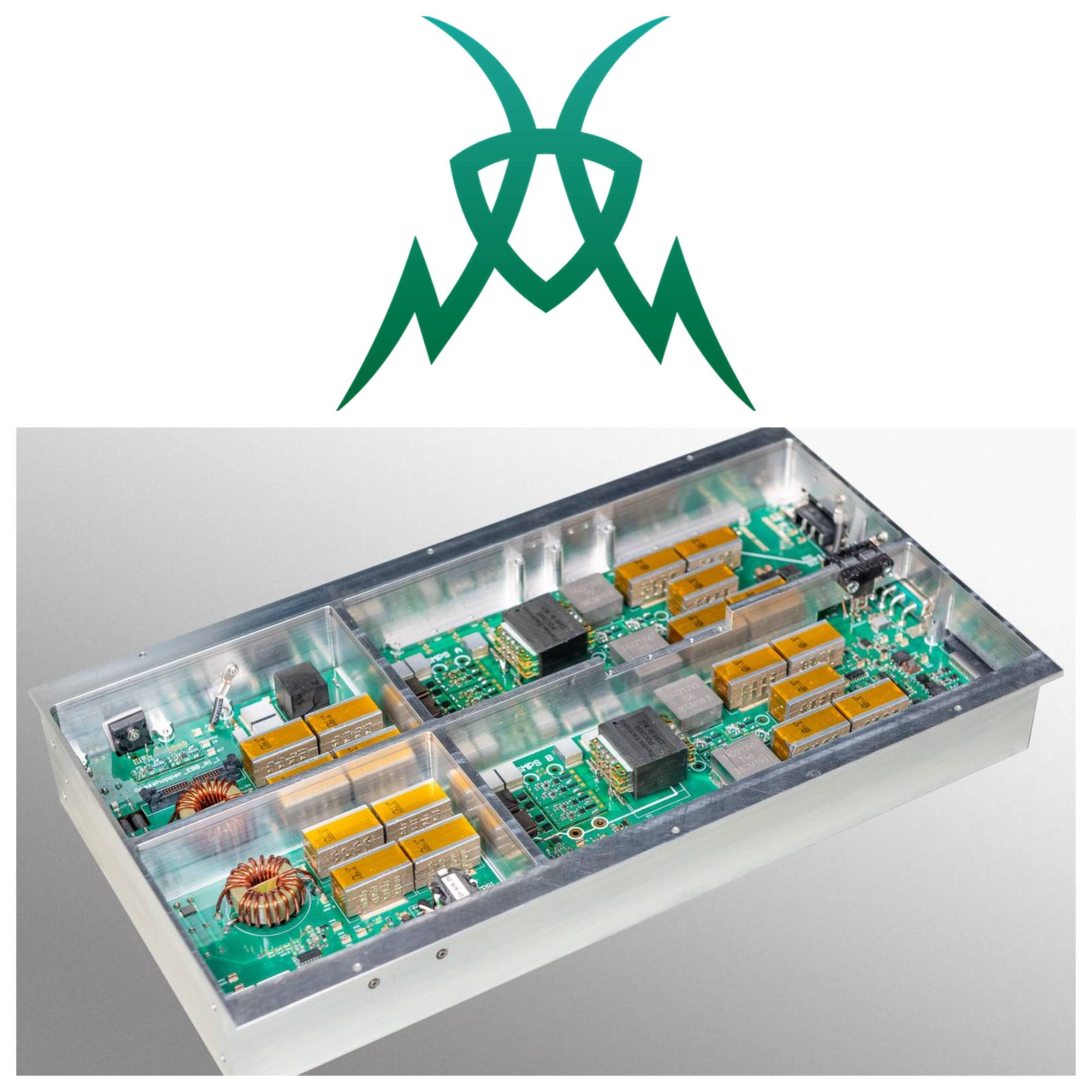
GRASSHOPPER
(GaNbased Resonant Aerospace Switching-mode Supply for High Output Power)
introduces cutting-edge DCDC converters are the cornerstones of satellite power supplies, as converting the fluctuating DC voltage from solar panels to custom voltage and power levels, while meeting specific requirements for noise and efficiency, poses a unique challenge for the onboard electronics of every large satellite.
These satellites typically have planned lifespans of 5-10+ years, so both design and component selection prioritize the highest reliability.
The components have been integrated, and the converter’s measurement campaign has been completed. While raising the TRL of C3S to TRL- 6/7 involves implementing processes and learned plenty of “good practices” to create a robust converter for the space industry. The requirements, defined by an LSI for motor driving, include a 22-38V input, ±44V and +15V output voltages, and a power rating of 75W. The system features ECSSbased TMTC and a robust protection system, utilizing forward topology with coupled chokes and galvanic isolation.
SMILE PSU
The Solar wind Magnetosphere Ionosphere Link Explorer (SMILE) as a joint European-Chinese spacecraft measured the solar wind and its
dynamic interaction with the magnetosphere. C3S’s involvement in the project as subcontractor was responsible for the development of the primary payload power supply. Two types of power modules were included in the unit. These were the power supplies for CCD cameras and digital subsystems.
They had an FPGA as a main controller, which provided the telemetry from the boards, and handles the control signals. The project was
closed in 2019 at TRL 4.
Activities:
Power Suply design
Power distribution design
FPGA design
Housekeeping data acquisition
Communication over TIA/EIA-899 M-LVDS bus, implementing a subset of RMAP.
PLATO 2.0 AEU
C3S has designed and prototyped the Ancillary Electrical Unit (AEU) for ESA’s PLATO 2.0 medium-size satellite mission aiming to detect
and characterize extrasolar planetary systems. The AEU was responsible for power distribution and synchronization between the payload of 24 cameras and the platform. The project was closed
in 2019 at TRL 3.
Complex subsystem design:
Power Distribution Unit design
Synchronization module development
(Sync. of 26 cameras in PLATO 2.0)
Data aquisition and payload control
Structural and Thermal analysis
Ground Support Equipment development
Easy integration at both card and box level
It incorporates highly integrated DC/DC converters and a FPGA-based flexible synchronization solution, while its low-noise multiple output power supplies guarantee stable performance.

RoR
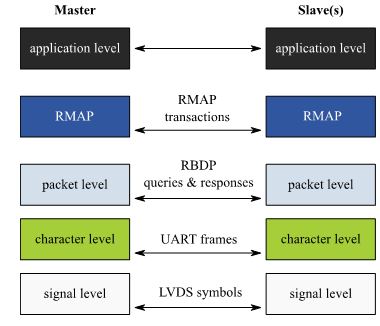
RoR Protocol Stack
RoR is a general-purpose, lightweight serial communication protocol stack for housekeeping data acquisition and control of remote submodules. The lower 3 layers of the stack are together called Regu-lar Bytestream DAQ Protocol (RBDP) and the upper layer augment-ing it is called Remote Memory Access Protocol (RMAP). The 4 layers together compose the complete RMAP over RBDP (RoR) protocol stack.