
OWL Product Family
Autonomous Satellite Localization and Identification
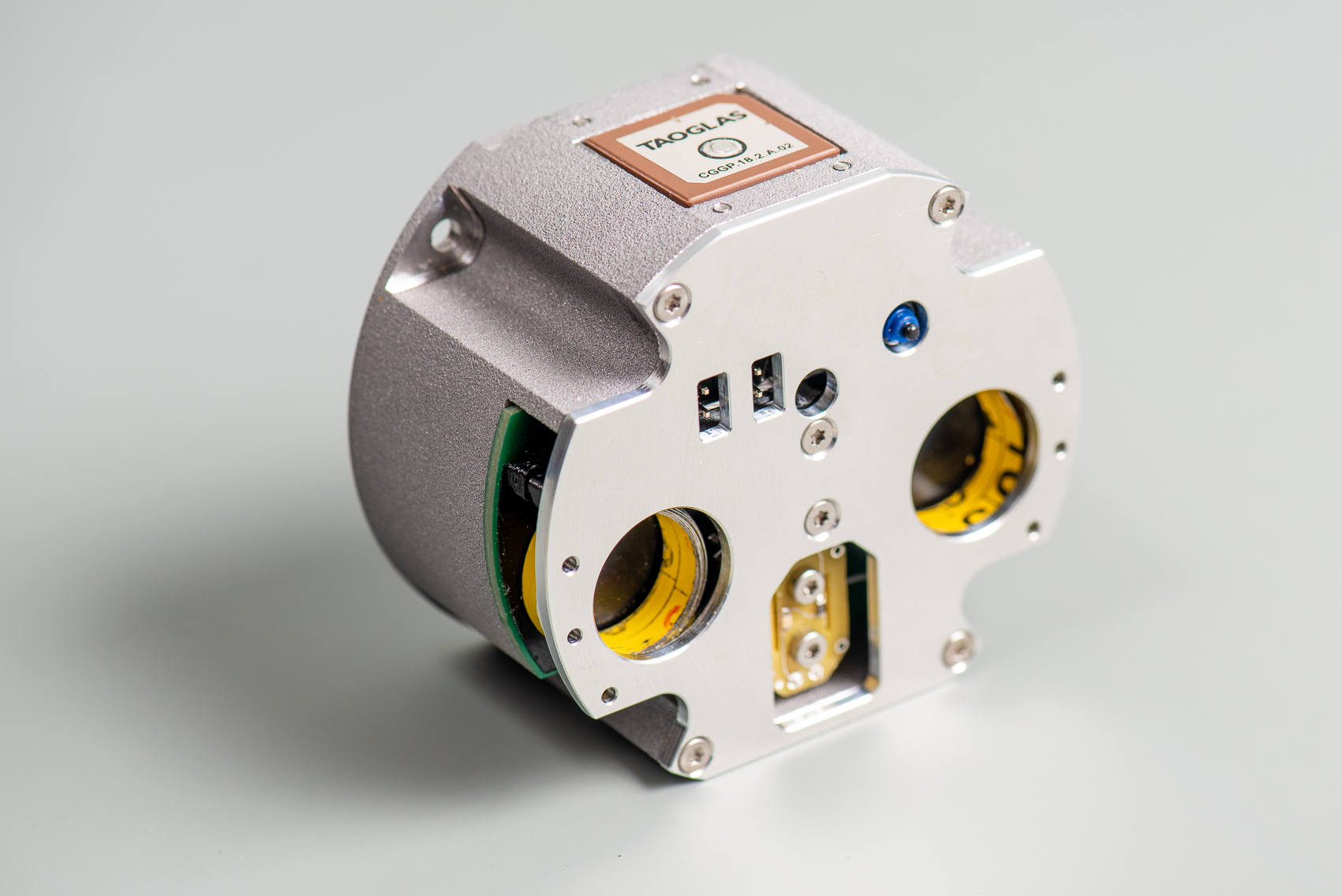
OWL 1
Autonomous GNSS Tracking and VHF Beaconing for CubeSat Missions
OWL 1 is C3S’s flight-proven GNSS-based subsystem for nanosatellites, designed to support satellite identification, localization and early post-deployment operations.
Integrated into CubeSat platforms, OWL 1 operates independently from the host spacecraft using its own onboard battery. It transmits VHF beacon messages containing a unique satellite identifier, GNSS position and key mission telemetry, enabling rapid satellite acquisition, orbit determination and initial operational verification after deployment. The unit also monitors key onboard parameters, including angular velocity, PCB temperature, battery voltage, spacecraft bus voltage and optional radiation data. Through an optional interface, GNSS and housekeeping data can be shared with the host spacecraft, extending OWL 1’s functionality beyond autonomous tracking.
Key benefits
Independent operation
Operates with its own onboard battery.
VHF beacon transmission
Transmits satellite ID, GNSS position and mission telemetry.
Onboard measurements
Monitors angular velocity, temperature, voltages and optional radiation data.
Optional host interface
Shares GNSS and housekeeping data with the host spacecraft.
Early mission support
Supports rapid acquisition, orbit determination and initial operational verification.
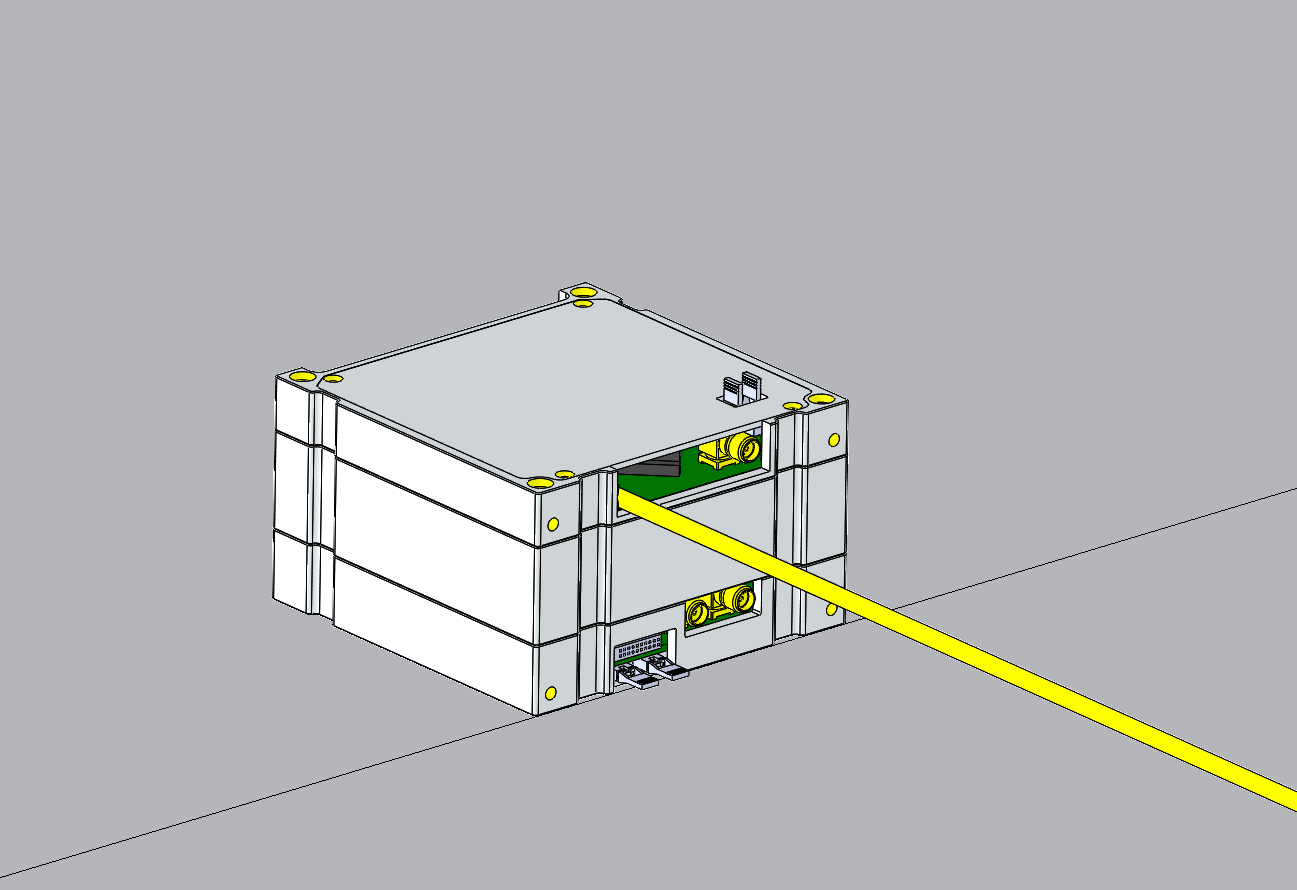
OWL 2
Trusted spacecraft state estimation
Building on the flight heritage of OWL 1, OWL 2 extends autonomous tracking into independent spacecraft state estimation. By combining dual-antenna GNSS, IMU, magnetometer measurements, and an onboard Extended Kalman Filter (EKF), OWL 2 provides a robust estimate of spacecraft position, velocity, attitude, and angular rates.
The system delivers independent PVT data, attitude and rate telemetry, and estimator health information, supporting safe operational decisions even when primary AOCS telemetry is degraded or unavailable. The same trusted state information also supports Collision Avoidance Manoeuvre (CAM) readiness assessment and can contribute to disposal assurance in degraded mission scenarios.
View datasheet →Key benefits
Independent power architecture
Independent battery with flexible charging options, including host charging, buck–boost charging or OWL-integrated MPPT.
Fallback TC/TM communication
Host satellite TC/TM interface, with OWL capable of serving as a fallback communication channel.
Dual-antenna GNSS support
Dual-antenna GNSS-based positioning and attitude support, with compatibility for simpler GNSS modules.
Deployable monopole antenna
Provides reliable communication capability even during spacecraft tumbling.
Inter-Satellite Link communication
Supports Inter-Satellite Link communication for up to 20 OWL units.
OWL Evolution
From flight-proven beaconing to trusted spacecraft state estimation.
| Capability | OWL 1 | OWL 1.5 / WISDOM | OWL 2 |
|---|---|---|---|
| Core function | Beacon + GNSS tracking | OWL 1 + ISL | Navigation telemetry subsystem |
| Main use | Identification and location | Extended communication concept | STM, CAM, EoL disposal and ADCS anomaly resolution support |
| Communication | VHF to ground | VHF + ISL | VHF + ISL |
| GNSS | Multi-constellation GNSS | Multi-constellation GNSS | Dual-antenna, multi-constellation GNSS |
| Sensors | GNSS, IMU, basic telemetry, optional TID | GNSS, IMU, basic telemetry, optional TID | GNSS, IMU, magnetometer, optional TID |
| Estimation | GNSS, IMU, basic telemetry | GNSS, IMU, basic telemetry | PVT, attitude and angular rate telemetry |
| Power autonomy | Battery-limited | Battery-limited | Dedicated solar-cell / body-mounted solar input possible |
| Platform scope | CubeSat-focused | Mission-specific evolution | CubeSats and larger satellite platforms |
| Zero Debris relevance | Basic tracking | Improved communication path | Independent state knowledge for CAM and degraded scenarios |
Future Development
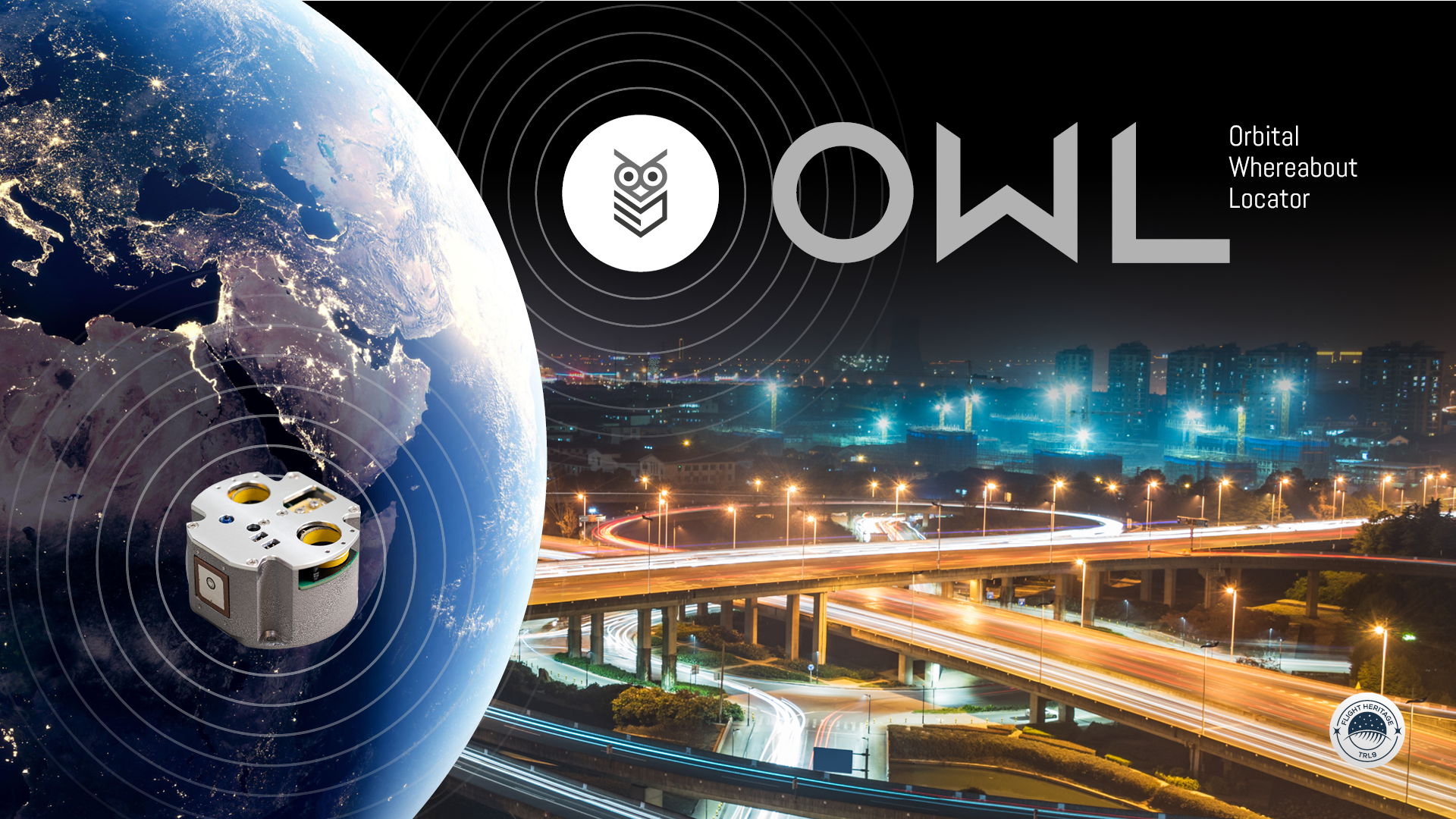
OWL technology is being further developed toward autonomous mission applications, extending its role from satellite acquisition and localization toward space traffic awareness and multi-satellite coordination.
Collision avoidance
Supporting future autonomous decision-making and manoeuvre preparation.
Distributed tracking
Enabling more resilient spacecraft localization and shared orbital awareness.
Inter-satellite communication
Supporting coordinated data exchange between multiple OWL-enabled spacecraft.